Creator: JJ Rabinowich
SNF Digest #156

The White House focused this week on rescinding a Biden-Era rule regarding fuel economy standards, a new Executive Order focused on price fixing in the food supply chain,..
WHITE HOUSE:
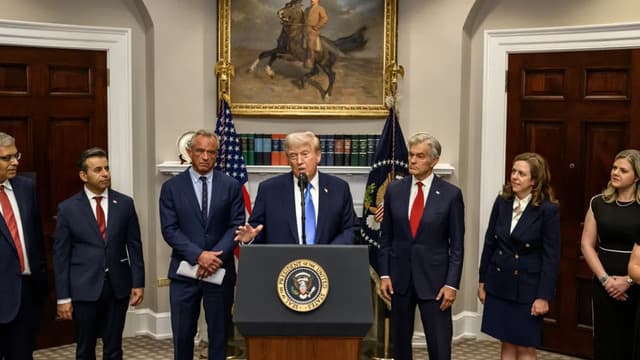
The White House focused this week on rescinding a Biden-Era rule regarding fuel economy standards, a new Executive Order focused on price fixing in the food supply chain, and changing up the federal guidelines for childhood vaccines. One item that will likely be of interest to our readers, although not specific to long-term care:
· As part of the One Big Beautiful Bill new “Trump Accounts” are going to be created for all US children born between 2025 and 2028, which will be seeded with $1,000. This past week, Michael & Susan Dell announced a charitable gift of $6.25 billion, which will result in an extra $250 put into each account of 25 million children in specific zip codes where the median income is under $150,000. More details on the accounts are available here.
CONGRESS:
As we’ve touched upon the last few weeks, time is running short for Congress with only two legislative weeks left in the calendar. Top on the agenda is the annual must-pass national defense bill, which was finally released (PDF) late Sunday night. While the focus is obviously on defense related issues, the trouble in getting the usual bipartisan bill done highlights the bigger issue: GOP Speaker Mike Johnson has his hands full wrangling Congress. With several competing plans on their way to address the expiring health care subsidies, and the White House letting Congress figure it out, several Senators are pushing for a short term extension to finalize a plan. As always, Congress likes to leave things to the last minute. Elsewhere in DC:
· Looks like the dust has finally settled on the Texas redistricting case with the Supreme Court ruling that the state’s new maps are OK, giving Republicans another 5 seats. The ruling set off a daisy chain resulting in one Congressional retirement, Indiana’s House finally passing their own new map (although the state Senate might not agree), and potentially opening the door to more redistricting shenanigans.
· It looks like there’s some appetite in the Senate to pass some form of PBM legislation. It comes as Republicans are focusing on reducing drug pricing as a primary political messaging point.
· Senator Ruben Gallego, a Democrat from Arizona, is urging the Trump Administration to take a long hard look at how tech companies are abusing the H1B program. The letter is available here (PDF).
· The Florida gubernatorial race is starting to heat up.
· Still nothing official on the Rural Health Transformation Fund, but reports are emerging that states that chose to follow policies that are priorities of the Administration are likelier to get chosen for the funds.
AGENCIES:
Still waiting for the official guidance from CMS, but they notified AHCA this past week that the 855a Provider revalidation deadline has been suspended indefinitely.
CMS formally repealed the nursing home minimum staffing mandate. The notice was published to the Federal Register last week.
HHS released their new AI strategy to integrate into their internal operations. The central resource page is here. The full strategy is here (PDF).
CMS hosted a convening of industry leaders to discuss their new ACCESS model, which is a voluntary model designed to better treat chronic conditions. The full recording is here (YouTube).
The GAO (Government Accountability Office) released a new report that found serious fraud risks exist in the subsidies paid to insurance companies as part of the Affordable Care Act. The full report is here (PDF).
The OIG at HHS did an audit of Medicare payments to Optometrists for services performed at SNF’s, finding that payments often did not comply with Medicare requirements. The summary is here (PDF) while the full report is here (PDF).
FROM THE NOTEBOOK:
· New York issued new guidelines for the closure of healthcare facilities. It’s available here (PDF).
· A useful guide to state legislative calendars.
· A deep dive into Medicare’s new WISeR model, which will test out the use of AI-powered prior authorizations.
· A new article was published in JAMA by the World Health Organization with their new guidelines on using GLP-1’s as weight loss drugs.
· A new study in Science Direct found that the use of a “predictive algorithm” by MA plans led to a 13% decline in SNF length of stay. McKnight’s has a good summary.
· An early look at some of the bills that are teed up for consideration in the Washington Legislature.
SNF Digest #157