Creator: JJ Rabinowich
SNF Digest #165
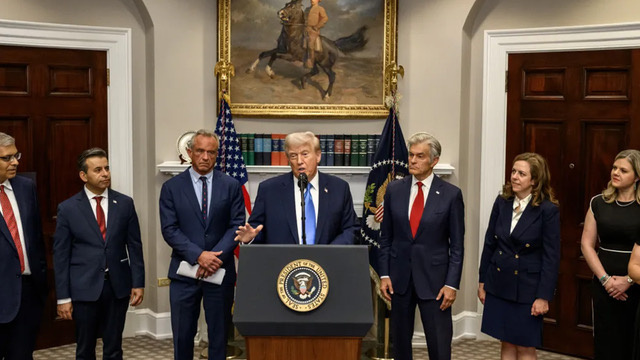
Over the last two weeks, the White House focused on a new global tariff (following the Supreme Court ruling overturning the original set of tariffs), continuing the suspension of the de minimis trade exemption...
WHITE HOUSE:
Over the last two weeks, the White House focused on a new global tariff (following the Supreme Court ruling overturning the original set of tariffs), continuing the suspension of the de minimis trade exemption (a policy that meant no taxes/paperwork on imports valued at less than $800), a trade deal with Indonesia, supporting the coal industry, and ending the Obama-era “Endangerment Finding” that acts as the underpinning regulatory rationale for most climate change related regulations across the federal government. Two items of interest:
The President signed S. 269, the “Ending Improper Payments to Deceased People Act”, a Congressional bill that makes permanent a law put into place in 2020 that enables greater sharing of data among federal agencies to ensure federal payments don’t go to deceased individuals. The more data is shared, the easier it is for the federal government to catch fraud.
At the India AI Impact Summit 2026, the US continued its push for a more AI adoption, as well as promoting American AI products. It’s a continued sign of the Administration goals to make America a global leader in AI.
CONGRESS:
As the partial government shutdown of the Department of Homeland Security continues into its second week, there’s little sign of progress. With the agency already funded for next year (through the One Big Beautiful Bill), Democrats recognizing it’s a politically popular issue, and the shutdown’s effects isolated to one group of agencies, the usual external pressures to find a solution are missing, leading to concerns over a protracted shutdown. As always, it’s important to remember that there’s a real human cost to government shutdowns. With votes in Congress pushed back to Tuesday as a result of the winter storm in the Northeast, it’s anyone’s guess when this will get resolved. Elsewhere in the political world:
The President is coming to the Hill to deliver the first State of the Union address of his second term. The official Democratic response will be delivered by new Virginia Governor, Abigail Spanberger, although quite a few other Democrats are planning on issuing public responses.
The House Energy & Commerce Subcommittee on Health held a second hearing on drug pricing and PBM’s. If you’re trapped in the snow, you can watch the whole hearing here.
Congress is making progress on a real bipartisan effort to solve the country housing affordability crisis.
An unlikely duo has teamed up for the latest push to take on rising healthcare costs. Senators Warren and Hawley have introduced the “Break Up Big Medicine Act” to tackle consolidation in healthcare. A summary of the bill is here (PDF).
Congressional earmarks have topped $15 billion for the latest fiscal year.
With the White House leaning into their efforts to stop AI regulation at the state level, Roll Call did a deep dive into the current state of affairs for AI regulation.
Early voting has started in the Texas Senate primary, where incumbent Senator John Cornyn is caught in a tough race with Texas AG Ken Paxton.
A look at several of this year’s early primaries.
The House Judiciary Committee issued subpoenas to 8 major health insurers to get access to more data on potential fraud in the healthcare subsidies.
Y’know who’s also thinking about the 2028 presidential race? The President.
One CRS report from the last few weeks: an analysis of the No Surprises Act Independent Dispute Resolution process.
AGENCIES:
HHS released a huge dataset containing provider-level claims data for Medicaid spending.
HHS shook up its leadership team.
CMS proposed a new rule to expand plans offered on the exchanges. The fact sheet is here. The full rule can be found at the Federal Register.
HHS announced that nearly 500 million health records have been processed through TEFCA, the “Trusted Exchange Framework and Common Agreement”, the federal framework designed to make it easier to share health information.
CMS announced that more than a dozen major payers signed a pledge to join the CMMI ACCESS model.
The Department of Labor announced the release of up to $145 million in funding for apprenticeship programs.
The VA is looking for a new dental care administrator to run their network of dental care providers for veterans.
HRSA issued a RFI looking for information on how to select and use drugs for its 340B program, which has provided discounts to subsidize safe-net care.
The Wall Street Journal reports on a recent court decision that, as a result of the disaster declarations tied to Covid-19, tax deadline between 2020 and 2023 were essentially turned off. That could have serious implications for interest, penalties, and refunds. It’s worth consulting with your tax advisors.
With prediction markets like Kalshi and Polymarket facing intense state-based regulatory interest, the Chairman of the Commodity Futures Trading Commission (CFTC, which has oversight on this type of market) penned an op-ed against state attempts to regulate them.
FROM THE NOTEBOOK:
Guess which sector continues to prop up the jobs market? Healthcare.
A new study in JAMA looked at the 3-day stay rule and found that it’s actually counterproductive, as it led to longer, costlier hospital stays. McKnight’s has a good summary.
A new working paper finds that increasing immigration for healthcare workers would lead to fewer deaths nationwide.
Statnews looked at another potential impact from the CMS MA rate proposal: CMS will be using fresher data in determining what to pay plans.
The first “dementia village” is coming to the US.
A deep dive from Reuters on the rise in complaints to FDA arising from the reliance on AI in medical devices.
Axios looked at a new ways that employers are taking to split GLP-1 drug costs with employees.
A new study in JAMA found that nearly 3 million people on MA plans had to switch in 2026 owing to market changes. Reuters has the summary.
CT Governor Ned Lamont wants a new “Connecticut Option” for healthcare plans for small employers.
More than 20 health systems have banded together to launch NSCAC, the National Specialty Care Access Coalition, a new effort to provide specialty care for rural communities.
Oklahoma is launching its own state-based healthcare exchange.

SNF Digest #166