Creator: Mordy Eisenberg
The Adoption Gap – Part 1: Why Your Staff Isn’t the Problem
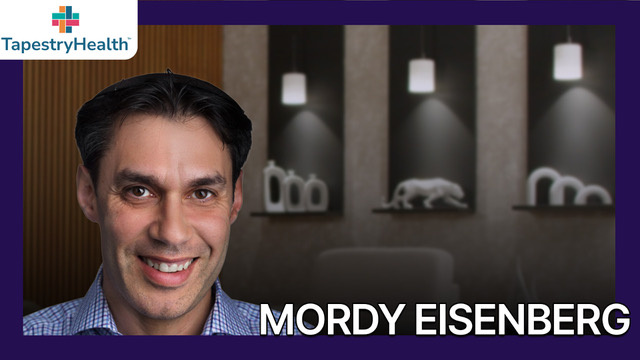
This is the first of a four-part op-ed series by Mordy Eisenberg of TapestryHealth on technology adoption in skilled nursing titled, “Why Your Staff Isn’t the Problem.”
This is the first of a four-part op-ed series on technology adoption in skilled nursing.
Part 1: Why Your Staff Isn’t the Problem
Every failed SNF tech rollout ends the same way.
Someone in leadership shrugs and says, “The staff just didn’t adopt it.”
And just like that — the vendor gets paid, the contract gets filed, and 47 CNAs absorb the blame for a decision they had no part in making.
Let me say this plainly: your staff is not the problem.
According to research on digital health technology adoption across healthcare settings, 39 percent of healthcare leaders cite staff resistance as the primary barrier to digital transformation.¹ That statistic gets quoted constantly. What never gets quoted is the follow-up question nobody asks: Why are they resistant?
Because when you actually talk to the people on the floor — the CNAs clocking 12-hour shifts, the DONs managing 40-person units — the resistance isn’t about fear of technology. It’s a rational, calibrated response to being burned before.
They’ve seen the rollout that got announced at an all-staff meeting on a Tuesday and went live on a Thursday. They’ve sat through a 90-minute training session for a system they’d use every single day. They’ve watched administrators celebrate a “go-live” while they were still fumbling through screens mid-shift with a resident waiting.² That’s not resistance. That’s institutional memory.
Here’s What the Industry Keeps Getting Backwards
We treat “go-live” as the finish line — when it’s actually the starting gun. The real adoption work begins the day after launch, not before it. Most facilities invest 80 percent of their change management budget in pre-launch training and 0 percent in the 90 days that follow.
We deploy technology at people instead of with them. Research on nursing home technology rollouts finds that fear and unease among staff drops dramatically when they are engaged in workflow design before implementation begins.³ We skip that step. Every time.
We confuse training with change management. Training teaches someone how to click buttons. Change management teaches them why it matters — and gives them a reason to believe this time will be different. One is a task. The other is a culture shift.⁴
We forget that floor staff are rational actors. A CNA who has survived three failed EHR rollouts in five years isn’t resistant to change — she’s protecting her residents from disruption she’s learned to anticipate. That’s clinical instinct. Treat it like an asset.
HHS-funded research makes it clear: when a DON or clinical leader actively championed a technology implementation, it was significantly more likely to succeed. When that support was absent, projects stalled — not because the technology was bad, but because the human infrastructure to carry it never got built.⁵
The technology didn’t fail. The adoption model did.
Before Your Next Implementation, Can You Answer These Three Questions?
✅ Did frontline staff have input in workflow design — before the contract was signed?
✅ Do you have a named clinical champion on every unit whose role includes adoption, not just compliance?
✅ What does your 90-day post-launch support model look like — in writing?
If the answer to any of those is “no” or “not sure,” you don’t have a staff problem. You have a leadership problem dressed up as a technology problem.
The Adoption Gap is a four-part series on technology adoption in skilled nursing. Part 2 examines the gap between the vendor demo room and your med cart — and the questions operators should be asking that they aren’t.
Citations & References
¹ Sparkco AI. “The Future of Skilled Nursing Technology: Trends for 2025.” March 2026. https://sparkco.ai/blog/the-future-of-skilled-nursing-technology-trends-for-2025
² Prosci. “Best Practices for Change Management in Healthcare IT.” August 2025. https://www.prosci.com/blog/change-management-healthcare-it
³ Barihab. “Overcoming the Hurdles of Modernizing Long-Term Care.” September 2025. https://barihab.com/overcoming-the-hurdles-of-modernizing-long-term-care/
⁴ Activated Insights. “The Challenges of Technology in Post-Acute Care.” June 2025. https://activatedinsights.com/articles/the-challenges-of-technology-in-post-acute-care
⁵ Provider Magazine. “Influences on Health Technology Adoption in Nursing Facilities.” Winter 2025. https://www.providermagazine.com/Issues/2025/Winter/Pages/Influences-on-Health-Technology-Adoption-in-Nursing-Facilities.aspx
About the Author
Mordy Eisenberg is co-founder and chief growth officer at TapestryHealth, a clinical support and remote monitoring company serving post-acute and long-term care facilities. With deep experience as a long-term care and skilled nursing executive, Mordy sits at the intersection of clinical operations and technology adoption — focused on helping SNF operators close the gap between purchasing technology and actually embedding it into culture and workflow. His work spans value-based care strategy, clinical program design, and the organizational change management required to make health technology deliver on its promise at the bedside. He writes and speaks regularly on the operational realities facing post-acute operators navigating an era of unprecedented clinical and financial disruption.

Deeper Dive: CMS’s Tighter Survey, Enforcement Rules