Creator: JJ Rabinowich
SNF Digest #177
From the White House to Congress to the regulatory agencies, JJ gives you the inside word on what is what for this week.
WHITE HOUSE:
The White House focused this week on a new Executive Order directing federal regulators to explore how to integrate fintech firms and digital assets into the financial system, another executive order that would strengthen the financial system against access by non-citizens, and reversing a Biden-era rule on refrigerant regulations. One item of interest:
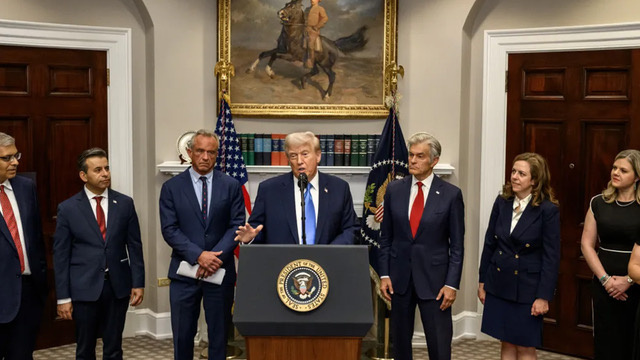
They continued to expand the list of available drugs at TrumpRx.gov to include more than 600 generics. It’s a result of a partnership with several of the leading generic pharmaceutical providers, including Costsplus, Amazon Pharmacy, and GoodRX. While most of the drugs are not specialized, the ongoing efforts to drive pharmaceutical prices down remains a key focal point for the Administration.
CONGRESS:
It’s never easy to get something done these days in Congress, especially something to do with funding. The party-line Reconciliation bill that was supposed to fund ICE and DHS was punted till after this week’s Memorial Day holiday recess as the Senate rebelled twice against the bill; first against the inclusion of funding for the White House ballroom and then against a new ‘anti-weaponization’ fund that the DOJ announced earlier in the week. Despite the lack of progress on finalizing the current Reconciliation, some of the most conservative Congressional members continue to push a third Reconciliation bill that would address other priorities. For now, with Congress out of town till next week, the holding pattern continues. Elsewhere in DC:
It was a good week for the President at the primaries as his efforts to oust several of his political antagonist were successful, including Kentucky Congressman Thomas Massie, who’s been one of Congress’ most, um, unique voices. Paradoxically, his success at the polls is making it harder to win legislatively as frustrations mount.
The President will look to keep his primary win streak going in Texas when he endorsed Texas AG Ken Paxton over incumbent Senator John Cornyn. The primary is this Tuesday. The bigger problem for the GOP is that Paxton is perceived to be a weaker candidate in the general election, potentially offering Democrats another seat that can be flipped.
The House Energy & Commerce Committee held a hearing to look at Medicare physician pay and what can be done to build a more sustainable payment system. You can watch the nearly 3-hour hearing here.
After keeping it under wraps for months, the DNC finally released an autopsy (PDF) of what went wrong in the 2024 election.
As we start to get closer to summer recess and non-stop campaign mode, there is one silver lining to all election, all the time: Congressional members want to campaign on wins, theoretically making it easier to find some bipartisanship…
Congress continues to find new ways to get around leadership and move bills.
One thing all voters agree on? There’s too much money in politics.
Three interesting CRS reports from the week:
o IF13229: A guide to Congressional offices on the new task force to eliminate fraud
o IF13233: A look at Medicare’s Site-Neutral Payment policy
o R48954: A guide to Data.gov, the federal government’s latest effort to create a centralized data repository
AGENCIES:
As a follow up to the One Big Beautiful Act, CMS released a new proposed rule that would better align State Direct Payments with Medicaid rates. The fact sheet is here. The proposed rule can be found at the Federal Register, where comments can be submitted through July 21st.
HHS announced the launch of the Audit Enforcement and Risk Oversight (AERO) initiative that will use AI to review whether states and other recipients of federal funds are complying with federal audits. The central resource page is here.
On his X account, HHS Secretary RFK posted a letter signed by himself, CMS Administrator Dr. Oz, and the National Coordinator for Health IT Tom Keane, that calls on EHR companies to accelerate adoption of drug price transparency into electronic health prescribing.
As a follow up to a letter (PDF) CMS sent in April to state health officials regarding the implementation of the One Big Beautiful Bill requirements on states related to provision of Medicaid to non-citizens, CMS created a slide deck (PDF) that breaks down the changes.
The OIG at HHS performed an analysis of ‘vertical integration’ in Medicare Part D plans and what it means for federal healthcare spending on pharmaceuticals, finding little impact on overall drug pricing. The summary is here (PDF) and the full report is here (PDF).
The OIG at HHS found that Connecticut didn’t comply with federal requirements for SNF’s in the state to perform background checks. The summary is here (PDF) while the full report is here (PDF).
The SEC ended their “gag rule” policy that required defendants who settled a complaint with the agency to not publicly challenge the agency’s version of events.
24 states and the District of Columbia filed a lawsuit against the recent Administration rule that limited student loan access to those pursuing a nursing degree.
FROM THE NOTEBOOK:
California Governor Gavin Newsom signed an executive order that directs the state to explore how to prepare workers for disruption that may result from AI deployment. The EO is here (PDF).
A new study in JAMA found that MA brokers are getting paid more than $10 billion a year… Becker’s has a good summary of the study.
Three separate hospitals filed lawsuits against CVS claiming that CVS has diverted more than $250 million in funding by lowering payments to the hospitals for drugs through the 340B program.
Modern Healthcare did a deep dive into the Medicaid Fraud Control Units that is at the center of the new federal effort to crack down on fraud that we mentioned last week.
A new analysis from the Kaiser Family Foundation found that hospital prices for private insurance companies have risen significantly faster than for Medicare over the last several years.

SNF Digest #178