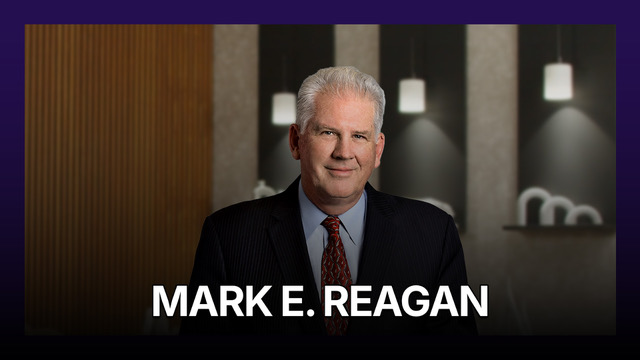
Creator: Mark E. Reagan
Legally Speaking: The Prep Act and Civil Immunity for COVID-19 Suits
For many post-acute and long-term care operators, COVID-19 still lingers despite ending three years ago. This article explores recent judicial decisions supporting civil immunity from related legal actions under the PREP Act.
For many post-acute and long-term care operators, the COVID-19 pandemic continues to live on despite its cessation some three years ago. For some, the lingering elements include lawsuits alleging negligent conduct relating to operator COVID-19. This article will explore recent judicial decisions supporting civil immunity from such legal actions under the Public Readiness and Emergency Preparedness Act (“PREP Act”). The use of the PREP Act is particularly important to the operators in states that had not enacted immunity laws to protect healthcare providers during the pandemic.
What the PREP Act Is
In short, the PREP Act is a 2005 federal law that allows the Secretary of the Dept. of Health and Human Services (“HHS”) to provide legal immunity to individuals and entities involved in the development, manufacture, testing, distribution, and administration of “covered countermeasures” during a declared public health emergency (“PHE”). The only exception to this immunity is “willful misconduct.” In instances where the immunity applies, individuals may seek financial compensation under the federal Countermeasures Injury Compensation Program.
At the outset of the COVID-19 pandemic, the HHS Secretary invoked the PREP Act, including issuing several “declarations” as to its use, including those involving the “administration” of such countermeasures. These were the elements most relevant to post-acute and long-term care operators as they were utilizing various countermeasures in facilities throughout the twists and turns of the pandemic.
Among other things, these included the expansive use of personal protective equipment (“PPE”), the immediate isolation of residents, the placement of residents in various areas or “zones” throughout the facility, the deployment of various staffing models and PPE utilization within these “zones,” the use of vaccinations (once available), and a myriad of other countermeasures.
The HHS Secretary recognized that the use of “covered countermeasures” by “program administrators” (such as post-acute and long-term care operators) needed to be applied more flexibly as some countermeasures were in short supply during portions of the pandemic. This meant that decision-making as to how to deploy scarce resources of such countermeasures would still support PREP Act immunity.
Lawsuit Strategy
When the first COVID-19 lawsuits were filed against operators, many legal counsels representing operators (myself included) identified the PREP Act as one of the primary statutes that could provide immunity based upon the allegations of negligence arising out of the pandemic. Most of these actions involve causes of action for wrongful death, either from the virus or other factors related to their care and treatment. While many states enacted their own laws providing immunity from such actions, some states did not do so. That is what makes the PREP Act so crucial as it is a national law that can protect operators throughout the nation.
The first attempt by operators to use the PREP Act was to “remove” (i.e., transfer) COVID-19 lawsuits from state to federal court based on the PREP Act and then subsequently seek their dismissal using the immunity. This strategy was rebuffed by the federal courts in that they refused these transfers and “remanded” these cases, requiring that the application of the PREP Act be made by numerous state courts around the nation. This occurred despite congressional direction that the PREP Act be applied in a consistent fashion across the country, something that would be impossible, one state court at a time.
Court Successes
Despite the federal courts’ refusal to accept these cases and “remanding” them back to state courts, we are now just starting to see the first cases from state appellate courts applying the substantive element of PREP Act immunity to healthcare providers arising from COVID-19 lawsuits. And the results look promising.
First, on March 4, 2026, in Waggoner v. Anonymous Health System, Inc., the Indiana Supreme Court held that the PREP Act provided immunity for the damages sought against a hospital for the death of a patient. The patient had developed COVID-19 and was placed on a ventilator. While on the ventilator, the patient allegedly developed a pressure sore and ultimately died from an infection related to the wound. Citing two 2024 Court of Appeals decisions, the Indiana Supreme Court held that the hospital was immune as the patient’s death arose from the use of the ventilator, a covered countermeasure.
Second, on April 7, 2026, in Reitz v. Regional West Physicians Clinic, the Nebraska Court of Appeals, affirmed the order of the District Court dismissing the action on summary judgment based upon the PREP Act. The facts in this case were nearly identical to those in Waggoner. The Court similarly held that the civil liability claims arose from the use of a covered countermeasure despite the allegations that the patient expired from the course of the wound rather than from COVID-19.
While the above cases did not involve post-acute or long-term care operators or the use of the types of countermeasures commonly used in their setting, they are significant. Not only do these decisions contemplate that claims of injury or death from COVID-19 are covered by the immunity, but they also extend this protection to allegations of harm that “arise from” the use of the countermeasures. This is enormously important as trial lawyers have also attempted to defeat immunity under various state-enacted protections by alleging non-COVID injuries.
Although three years have elapsed since the end of the COVID-19 PHE, the story of post-acute and long-term care civil liability arising from its devastating course has not yet fully been written. However, this first set of cases represent a positive first set in potentially closing this tragic chapter without punishing operators for doing everything in their power to protect residents. We will be closely monitoring developments in this area in the future.
Mark E. Reagan is the managing shareholder of Hooper, Lundy and Bookman, and a regular contributor to Park Place.
Questions or comments? Contact Patrick Connole at pconnole@parkplacelive.com.

R2: The Art of Tracking Down Reimbursement for SNFs