Creator: Mark E. Reagan
Legally Speaking: Protecting Operators from Managed Care Terminations
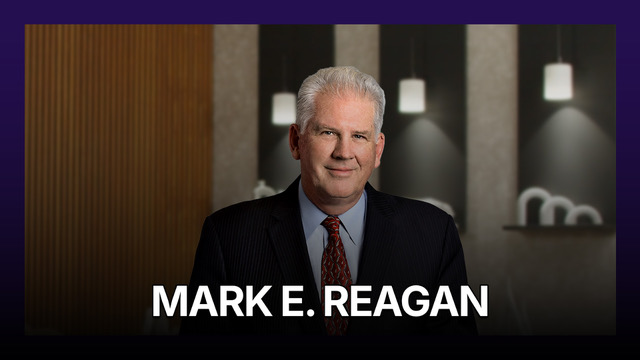
Mark E. Reagan poses the question: What process are you due when it comes to protecting operators from managed care contract terminations. Find out the answer here.
What Process Are You Due?
A majority of states throughout the nation have received approval from CMS to contract with Medicaid health plans to manage the payment and delivery of most Medicaid services.
In many of these states, skilled nursing services are included within the bundle of managed care services administered by health plans. Although some states allow beneficiaries to choose whether to have their skilled nursing services managed by health plans or through state fee-for-service systems, most states require health plan oversight.
Similarly, Medicare beneficiaries may opt to have their Medicare benefits managed by Medicare Advantage (MA) plans. Some states have also been permitted by CMS to force dual-eligible beneficiaries into MA plans with commonly owned Medicaid health plans, although these beneficiaries have the option to withdraw from such enrollment.
Although participation in MA plan networks is very important for skilled nursing operators, such participation is essential as to Medicaid health plans. Simply put, the inability to capture significant Medicaid revenue will likely result in financial failure.
With narrow exceptions, skilled nursing operators must participate in health plan networks in order to be paid for the services that they provide.
This article focuses on the unprecedented power delegated to such plans and what tools, if any, operators can use to protect themselves from threats of termination from these plans.
Regulators and the Network Conundrum
As an initial proposition, it is important for operators to understand that state and federal requirements mandate that health plans have in place an adequate network for all covered services. As to skilled nursing services, however, the primary problem is that the regulators don’t really know how to measure adequacy and, unlike other services, do not appear all that interested are policing the requirements.
Although this is a neglected area of regulatory oversight, it can be a powerful tool for advocacy around network participation. This is particularly the case in environments where skilled nursing beds are often scarce, and hospitals face significant challenges in making placements.
Along with the issues surrounding network adequacy, the due process protections of operators to confront threats of network termination are of paramount importance. However, the extent of such protections vary greatly across states and the law in some jurisdictions in this area has not been well-developed. As a result, while some states have enacted legislation or implemented regulation in this area, others have done nothing at all and it is up to courts to decide what protection, if any, may exist.
The development of case law in this area is also challenging as many health plans’ contracts require the submission of most disputes to binding arbitration.
The ‘Cause’ Question
The most important principle on this front is to invalidate network terminations done by health plans “without cause.” Plans must be required to demonstrate “good cause” to terminate the network participation of operators that rely on that participation for their financial survival. This is certainly most pertinent to the skilled nursing profession when states have delegated Medicaid coverage over a geographical area to only one or a small handful of plans.
Some courts have found that when a plan possesses extraordinary influence over the financial well-being of a healthcare provider, that only “for cause” terminations with a right to a hearing will suffice. That was the determination of the California Supreme Court in Potvin v. Metropolitan Life, a 2004 case where the court held that a “‘without cause’" termination clause is unenforceable to the extent it purports to limit an otherwise existing right to fair procedure under the common law.”
Notwithstanding this approach, a trial court in Ohio recently refused to invalidate a “without cause” termination of a behavioral health provider even where a state had contractually required plans to only utilize “for cause” terminations. This is a particularly egregious decision, especially when the contractual provision at issue was a program requirement.
Meanwhile, there is litigation pending in Tennessee in various forums as to whether state delegations of “without cause” terminations in the Medicaid context are improper as they are tantamount to an operator’s termination from the Medicaid program, particularly where the operator is certified and in good standing. It will be interesting to see how that litigation ultimately resolves.
Hostile to Due Process
Another potentially troubling element in both the Ohio and Tennessee situations is that Medicaid officials appear hostile to individual provider interests associated with ensuring due process. If this is the case in these and future circumstances, it may well require a greater focus on developing new approaches, such as joining Medicaid agencies in future litigation and involving beneficiaries far more in the process.
Takeaways
As policymakers continue to delegate away their duties to private health plans, operators and their advocates need to be ever diligent in asserting the grounds for these fundamental protections. These options include, but not are limited to, enacting protective due process requirements, intervening in a state’s procurement of Medicaid health plans to establish these protections, fighting back against contractual provisions allowing for “without cause” terminations, and challenging such terminations before legal tribunals.
Mark E. Reagan is the managing shareholder of Hooper, Lundy and Bookman, and a regular contributor to Park Place.
Questions or comments? Contact Patrick Connole at pconnole@parkplacelive.com.