Creator: JJ Rabinowich
SNF Digest #193
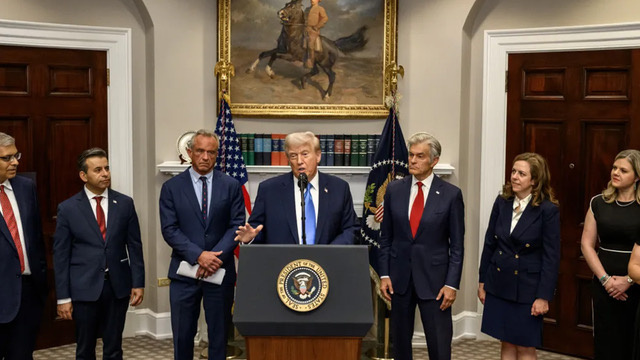
From the White House to Congress to the regulatory agencies, JJ gives you the inside word on what is what for this week.
In observance of Sukkot, there will be no SNF Digest next week. We will return on Wednesday, October 7.
WHITE HOUSE:
Over the last week, the White House on continuing the trade back and forth with Canada, issued a trio of Executive Orders focused on hunting, fishing, and the Chesapeake Bay, and prepared for the upcoming official state visit by China. Two items of interest:
They issued another Executive Order focused on the H1B program, this time looking to increase interagency coordination related to the program, including sharing more data related to wages and employment conditions when considering visa applications. The full text of the EO can be found here.
More details below in the agency section, but they announced that all 50 state Medicaid programs will be participating in the Administration’s Most Favored Nation (MFN) drug pricing efforts, which should, in theory, continue to drive down the cost of pharmaceuticals covered by Medicaid programs.
CONGRESS:
With the House home through the midterms, and the Senate looking to leave early, we’re going straight to the political roundup:
It’s a bit wonky, but the House Ways & Means Committee passed the Apples to Apples Comparison Act, a federal bipartisan bill that would change how MedPAC evaluates MA plans, a bill supported by the MA industry. The bill now moves to the full House, although a vote remains uncertain.
A large group of Congressional Democrats, both House and Senate, introduced parallel bills aimed at private equity in physician practices. At this point, given Congressional makeup it’s more performative than substantive, but it’s something to keep an eye on.
As election forecasts grow dimmer for Republicans, tensions are rising within the party as they struggle to find a message that combats the stark reality of high gas prices.
Even staunch Presidential supporters are publicly breaking with the President on everything from immigration to the Iran war to gas prices and he’s getting really frustrated.
Republicans and Democrats are both hyper focused on taking on the big healthcare companies.
AGENCIES:
As mentioned above, all 50 states have applied to participate in the GENEROUS model, the CMS initiative to bring MFN pricing to state Medicaid programs. 40 states have already signed their agreements. More details are available at the model’s central resource page.
CMS’s latest batch of Rural Health Transformation Program fund approvals are out:
CMS released preliminary Medicare payment rates for laboratory services. A fact sheet with more details is available here. The central data page is here.
CMS announced the cancelation of 760,000 individuals from the federal marketplace. The fact sheet highlights more of their “anti-fraud actions.”
For those who experienced the PPE challenges during Covid, this might be of interest. HHS announced the launch of a department-wide demand forecast for PPE. The forecast will be published quarterly through the Office of the Assistant Secretary for Financial Resources.
HHS, via SAMHSA, awarded more than $42 million to states to support the ‘treatment first’ model.
ARPA-H announced the launch of the SPECTRA program, a new effort to transform autism diagnosis and care. The main program page is here.
The OIG at HHS did an audit into Humana’s MA plan and found a pattern of overpayments. The summary is here (PDF) and the full report is here (PDF).
The SBA is getting in on the fraud conversation. They announced “Operation NO DOZE”, a new effort to target PPP and COVID EIDL fraud.
This may only be of interest to accountants and those who do procurement with the government, but the Department of Defense is looking to switch to GAAP accounting. The full memo is here (PDF).
The GAO released a report on the usage of paid administrative leave by the federal government, finding that agencies spent nearly $10 billion more on leave in 2025 than earlier years. Paid administrative leave was a tool used by DOGE to encourage retirement among federal workers in an effort to trim the workforce.
CMS notified MA plans last week that they’re making it easier to acquire other MA companies during the year. The formal notice is available in this ZIP file hosted on CMS’s memos site for health plans.
It hasn’t yet been formally created by any federal agency or the White House, but the President announcedon Truth Social that he’s launching an “AI Force.”
FROM THE NOTEBOOK:
After some back and forth earlier this month, Texas Governor Abbott announced that CMS had released the $12 billion in supplemental funding that had been held up.
KFF released a new analysis on “state fiscal conditions” as we head into the 2027 legislative budget cycle.
They also did a deep dive into the Managed Medicaid market.
HMA, one of the major consulting firms to state Medicaid agencies, also released an analysis of the market.
With the possibility that social security may run out of funds always in the news, the Committee for a Responsible Federal Budget (a DC think tank) released a new tool to highlight the challenges in finding ways to salvage the program and the trade-offs that need to be made.
The New York Times looked at the trend of SNF beds becoming more “scarce.”
The Washington Post released the text of several of the contracts between the Administration and pharma companies that are participating in the Administration’s efforts to lower drug prices.
New York is moving forward with the RAISE Act, the state’s aggressive plan to regulate AI.
A group of independent pharmacies in Arkansas sued Express Scripts in the first lawsuit under the state’s law giving independent pharmacies the right to sue for violations for reimbursement violations.
Nearly a year after he went after Medicare Advantage, John Oliver took on UnitedHealth.