Creator: Mordy Eisenberg
The Adoption Gap - Part 2: The Vendor Promise vs. the Floor Reality
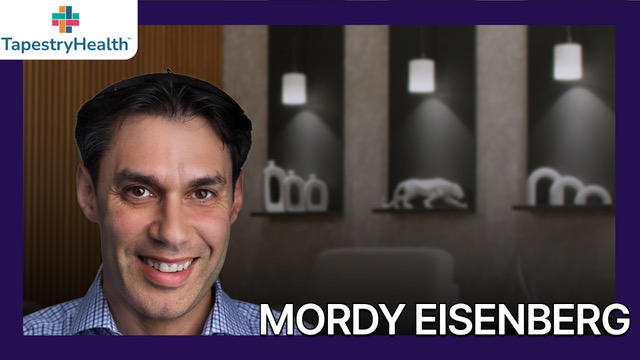
This is the second of a four-part op-ed series by Mordy Eisenberg of TapestryHealth on technology adoption in skilled nursing. This part examines why the demo phase is not the end-goal.
This is the second of a four -part op-ed series on technology adoption in skilled nursing.
Part 1. The demo was flawless.
The slides were beautiful. The workflow looked intuitive. The ROI projections were compelling. The sales rep knew your pain points better than you did.
And then your CNAs tried to use it on a Tuesday night at 11 p.m. with three callouts and a resident in distress.
That’s when you found out what you actually bought.
Studies consistently show that 30–50 percent of healthcare software implementations fail to meet their stated objectives.¹ The most common reason cited isn’t the technology itself. It’s that vendor selection prioritized impressive demos over operational reality.¹
Here’s the hard truth nobody in the vendor community wants to say out loud: most SNF technology is built by people who have never spent a shift on a skilled nursing floor. It is designed for the demo room — not the med cart, not the 2 a.m. call-light, not the DON managing 40 residents with two agency nurses who’ve never used the system.
The gap between the pitch and the practice is where most implementations go to die.
Three Ways Vendors Fail SNF Operators — Before the Contract Is Even Signed
🔹 They sell to administration, not to the floor. The buying decision lives in the C-suite. The lived experience of the product lives with the CNA and the charge nurse. When those two realities never intersect during the sales process, you’re guaranteeing a mismatch. Nearly 60 percent of SNF staff report frustration with system navigation — leading to workflow slowdowns and increased training costs.² That frustration was baked in at the demo stage. Nobody just forgot to mention it.
🔹 They optimize for the pitch, not the integration. Only 46 percent of long-term post-acute care providers report that their EHRs can electronically exchange patient health information with outside providers.² That is a vendor ecosystem failure, not a provider failure. When you’re buying a “seamless, interoperable solution” and find out on go-live day that your systems don’t actually talk to each other, you didn’t get bad technology. You got a bad vendor.
🔹 They disappear after go-live. Forty-two percent of SNFs identify limited post-implementation support as a significant barrier to successful adoption.² The account executive who spent six months courting your signature is replaced by a support ticket system and a knowledge base. KLAS Research data shows that 73 percent of organizations measured below-average clinician satisfaction scores following a new EHR implementation — with nurse satisfaction dropping measurably post go-live.³ That is a vendor support failure. Every time.
And Then There’s the Pilot Trap.
The 90-day pilot has become the industry’s favorite illusion of due diligence.
Here’s the problem: a 90-day pilot almost never replicates real-world conditions. Census isn’t typical. Staff are on their best behavior. The vendor has an implementation team embedded on-site. Everyone is motivated to make it look good — including you, because you championed the decision.
What you’re actually testing is the vendor’s ability to perform under optimal conditions.
Leading health systems have moved away from 90-day pilots entirely — replacing them with extended evaluation cycles that test vendor responsiveness during actual operational challenges.¹ The result is measurably lower post-implementation modification costs and significantly higher clinician satisfaction.¹
The Questions Every Operator Should Be Asking — and Isn’t
Before you sign your next contract, ask the vendor these questions directly:
✅ “Can I speak with three DONs at facilities similar to mine — not your flagship references?” References are curated. Ask for mid-size, similar-acuity facilities that went live at least 12 months ago.
✅ “What does your post-implementation support model look like at month seven — not month one?” The month-one concierge experience is not the product. Month seven is the product.
✅ “Walk me through a failed implementation. What happened and what did you change?” A vendor who can’t answer this hasn’t learned anything. A vendor who answers it well has earned your trust.
✅ “Can your system operate effectively if my floor staff have limited digital literacy?” If the honest answer requires a six-week training program, that’s a usability failure — not a staff problem.
The AHCA/NCAL comments to the RFI on digital health in long-term care have been explicit: the lack of vendor focus on SNF and LTPAC settings has created a cycle of market neglect — technology built for acute care, retrofitted for post-acute, and called “purpose-built.”⁴ Operators are buying solutions designed for a different care environment and then wondering why the floor rejects them.
You are not a tier-two customer. Stop accepting tier-two solutions.
The Adoption Gap is a four-part series on technology adoption in skilled nursing. Part 3 applies Geoffrey Moore’s Crossing the Chasm framework to post-acute care — and makes the case for why operators who are “waiting to see” have already made a strategic choice with serious consequences.
Citations & References
¹ LinkedIn / Healthcare IT Analysis. “Why Half of Healthcare Software Implementations Fail.” November 2025. https://www.linkedin.com/pulse/why-half-healthcare-software-implementations-fail-how-nate-ph3wc
² Sparkco AI. “Top Skilled Nursing Software Vendors for Modern Facilities.” April 2026. https://sparkco.ai/blog/top-skilled-nursing-software-vendors-for-modern-facilities
³ KLAS Research. “EHR Implementations 2025 — Arch Report.” January 2025. https://klasresearch.com/archcollaborative/report/ehr-implementations-2025/628
⁴ AHCA/NCAL. “Adopting AI — RFI Comments on Digital Health in Long-Term Care.” February 2026. https://www.ahcancal.org/News-and-Communications/Fact-Sheets/Documents/Adopting%20AI%20RFI_RIN%200955-AA13_AHCA_NCAL%20Comments_.pdf
About the Author
Mordy Eisenberg is co-founder and chief growth officer at TapestryHealth, a clinical support and remote monitoring company serving post-acute and long-term care facilities. With deep experience as a long-term care and skilled nursing executive, Mordy sits at the intersection of clinical operations and technology adoption — focused on helping SNF operators close the gap between purchasing technology and actually embedding it into culture and workflow. His work spans value-based care strategy, clinical program design, and the organizational change management required to make health technology deliver on its promise at the bedside. He writes and speaks regularly on the operational realities facing post-acute operators navigating an era of unprecedented clinical and financial disruption.