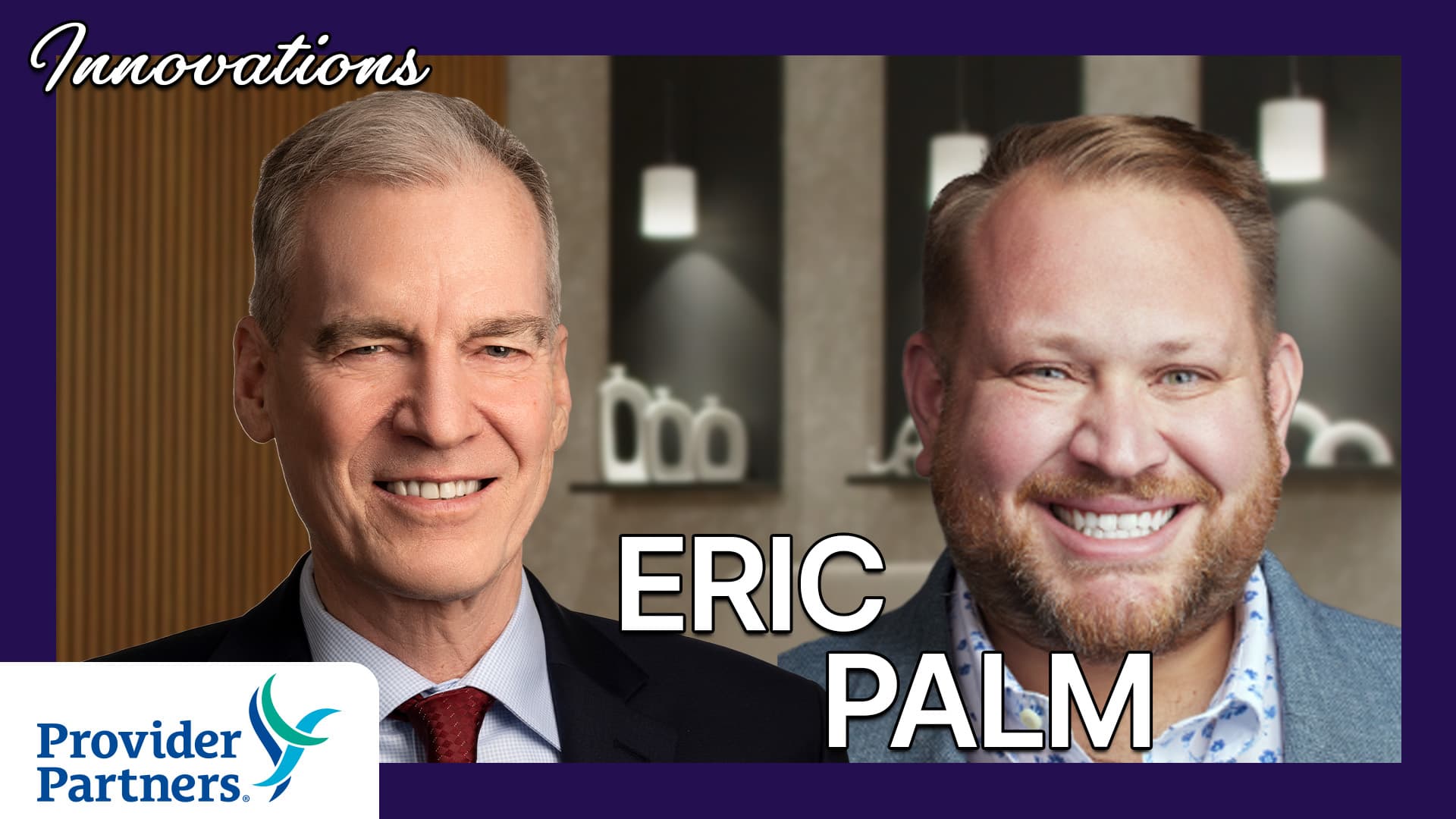
Transcript Generated by AI 00:00 Mark Parkinson back with Park Place, 00:02 and we're here live in the studio today, 00:04 which is fun, 00:05 uh, 00:06 to talk about an important topic, 00:07 which is what is the future of value-based purchasing. 00:10 There's been a lot of concern in the sector that with the 00:12 expiration of the REACH ACO program at the end of this year, 00:16 that providers might be out of luck. 00:18 Well, 00:19 we have some good news today. 00:20 Apparently that's not the case. 00:21 We're here with Eric Palm, 00:22 who's the chief growth officer at Provider Partners. 00:26 And Eric, 00:26 I know there's a lot of concern that Reach ACO ends at the end of this year, 00:31 but CMS apparently has some good news that there's something else. 00:33 First of all, 00:34 thanks for coming into the studio. 00:35 Thanks for having me. 00:36 Appreciate you coming all the way from Kansas City to do this. 00:39 Uh, 00:39 what, 00:40 what's the news? 00:41 Yeah, 00:41 so ultimately, 00:43 The models in the value-based care space, 00:45 particularly with RA, 00:47 change over time. 00:48 So it originally started as DCE or direct contracting, 00:51 then it converted to Reach, 00:52 and then now it's converting into the lead model, 00:55 LEAD 00:57 in January 1st of 2027. 00:59 And it, 01:00 they're all evolving. 01:03 You know, 01:03 in each individual model, 01:05 and at this point, 01:05 the lead model actually is looking very 01:08 interesting but also very positive for us in the long term care space. 01:12 So Reach has been a really good program. 01:14 Lead might be just as good and possibly even better. 01:17 And, 01:17 and there's, 01:18 you certainly shouldn't wait or exit because of this change. 01:21 It looks like there could actually be an improvement. 01:23 CMS ultimately wants to enroll lives into a value-based care program. 01:27 So if you're in a program today. 01:30 those lives are gonna be able to be moved into a lead program in some form or fashion. 01:34 And we don't know how or why or when. 01:36 Well, 01:37 we know when, 01:37 January 1st, 01:38 but how, 01:39 we're still waiting on the CMS's feedback. 01:41 But the ultimate reality is they want to keep the lives in these programs. 01:44 And so we are running 01:46 Full force through 2026 01:48 and then into 2027. 01:50 That's great news. 01:51 So, 01:51 what do you see as the future of DBP over the next 10 years or so? 01:54 So what, 01:55 what we're facing now is these programs ultimately 01:58 have been 234 or 5 year demonstration period 02:02 with the new CMMI director and 02:05 the new initiatives are rolling out. 02:08 The lead model is a 10 year model, 02:09 which they have never done before. 02:11 But what that gives us is a good 02:14 Runway 02:15 to start the model, 02:16 perfect the model, 02:17 and also have groups grow in the model. 02:19 3 years 02:21 goes quick for the RA program, 02:22 or 4 years goes quick for the RA program. 02:25 Uh, 02:25 now we have 10 years, 02:26 which they've never done before. 02:28 But there's also a huge onslaught of different models that 02:31 they're releasing or different types of tracks or models. 02:35 There's the access model, 02:36 the elevate model, 02:37 the lead model. 02:38 I mean, 02:39 welcome to the CMS alphabet soup. 02:41 Um, 02:42 but there are so many options that are coming out now, 02:45 um, 02:45 which frankly is a good thing. 02:47 Yeah, 02:47 I mean, 02:48 and at least we know we can plan. 02:49 We've got 10 years and we don't have this, 02:51 this closure date hanging over us. 02:53 Do you think in the future 02:55 we will be paid through a DVP type payment, 02:58 or will we still get fee for service payments, 03:00 or, 03:00 or what do you think it'll look like? 03:02 I don't think, 03:03 I don't think the fee for service model will ever go away, 03:06 at least in, 03:07 in the next decade. 03:08 Now, 03:08 that's my opinion. 03:09 Someone's gonna argue against that, 03:10 and that's totally fine. 03:12 Um, 03:12 I think part of it is adapting to what's 03:15 available now. 03:17 So while that may never go away, 03:18 but how do you get ahead of 03:19 opportunities to make the financial outcomes in these types of models? 03:23 Um, 03:23 and that's really what we're pushing. 03:24 Our mission and our vision is to educate everyone on 03:27 what's coming and what's happening today in your communities. 03:30 So as new models emerge, 03:31 what should providers be looking for? 03:34 I think the first action is understanding what's happening today. 03:38 These models have been happening over the years, 03:40 uh, 03:41 have really been physician driven, 03:42 and our mission and our vision as an organization 03:45 is to 03:46 continue that on the physician side, 03:47 but also bring in the nursing home. 03:49 It is a partnership, 03:51 because these residents live in these homes, 03:53 and they have the capability to provide good care or bad care. 03:56 And so if we can build the 03:58 social capital at the buildings 04:00 in partnership with the physicians, 04:01 it's a win, 04:02 win, 04:02 win 04:03 for everybody involved. 04:05 So for SNP operators to succeed in the future, 04:07 what should they be doing now? 04:09 The first step, 04:11 and I do this 04:12 every week, 04:12 is to sit down 04:14 and evaluate what they're doing today. 04:16 You know, 04:17 how many physicians do you have around you in your building? 04:19 Are they hospital? 04:20 Are they local? 04:21 Are they regional docs? 04:22 What does that look like? 04:23 Do you have nurse practitioners in the building? 04:25 How many MPs do you have in the building? 04:27 There's so many 04:28 ideas and ways to think about it. 04:29 What technology do you have? 04:31 Are you doing CCM or RPM 04:33 through who and what model and how they're billing? 04:35 There are so many questions to really lay out 04:38 the idea of what's happening in your ecosystem in the community. 04:42 And then how do you take what you're doing 04:45 and fit it or mold it into an 04:47 ACO type model where everyone is financially winning. 04:50 But the really good news that we've learned this year is this is not going away. 04:54 Value-based care is not a fad. 04:56 It is here to stay. 04:58 Um, 04:58 now what the model is called or what it looks like, 05:01 that's a political who sits in the White House game. 05:04 Um, 05:04 but those models are going to keep going on and on and on. 05:07 Well, 05:07 Eric, 05:08 thank you for being here with us today and giving us this good news. 05:10 Yeah, 05:10 thanks, 05:11 Mark. 05:11 And you know, 05:12 I completely agree with Eric. 05:13 For 30 years we've been hearing that BBP was going to overtake 05:16 the sector and probably the 1st 2025 years that was wrong. 05:21 But a lot has changed in the last 5 to 10 years. 05:23 We're now over 300,000 lives in our buildings are in these programs. 05:27 With the recent announcement of CMS with the information that Eric's just given us, 05:31 it's quite clear this is not going away. 05:33 And so we'll continue to focus on it very heavily here 05:36 on Park Place. 05:37 Thank you for watching this video and thanks 05:39 for your continued support of Park Place. 05:42 Oh my God, 05:43 if you're still watching this, 05:44 this means that you watched the end of a very long video on Park Place. 05:49 I'm not sure what that means. 05:50 It says something 05:51 about you or maybe there was just nothing else to watch today, 05:54 or 05:55 maybe your priorities are a little bit off, 05:57 but whatever it is, 05:58 we really appreciate your support and 06:00 if you wanna continue to follow us, 06:02 follow us on LinkedIn and our various social media sites. 06:05 And, 06:06 you know, 06:07 try to find something else to do.