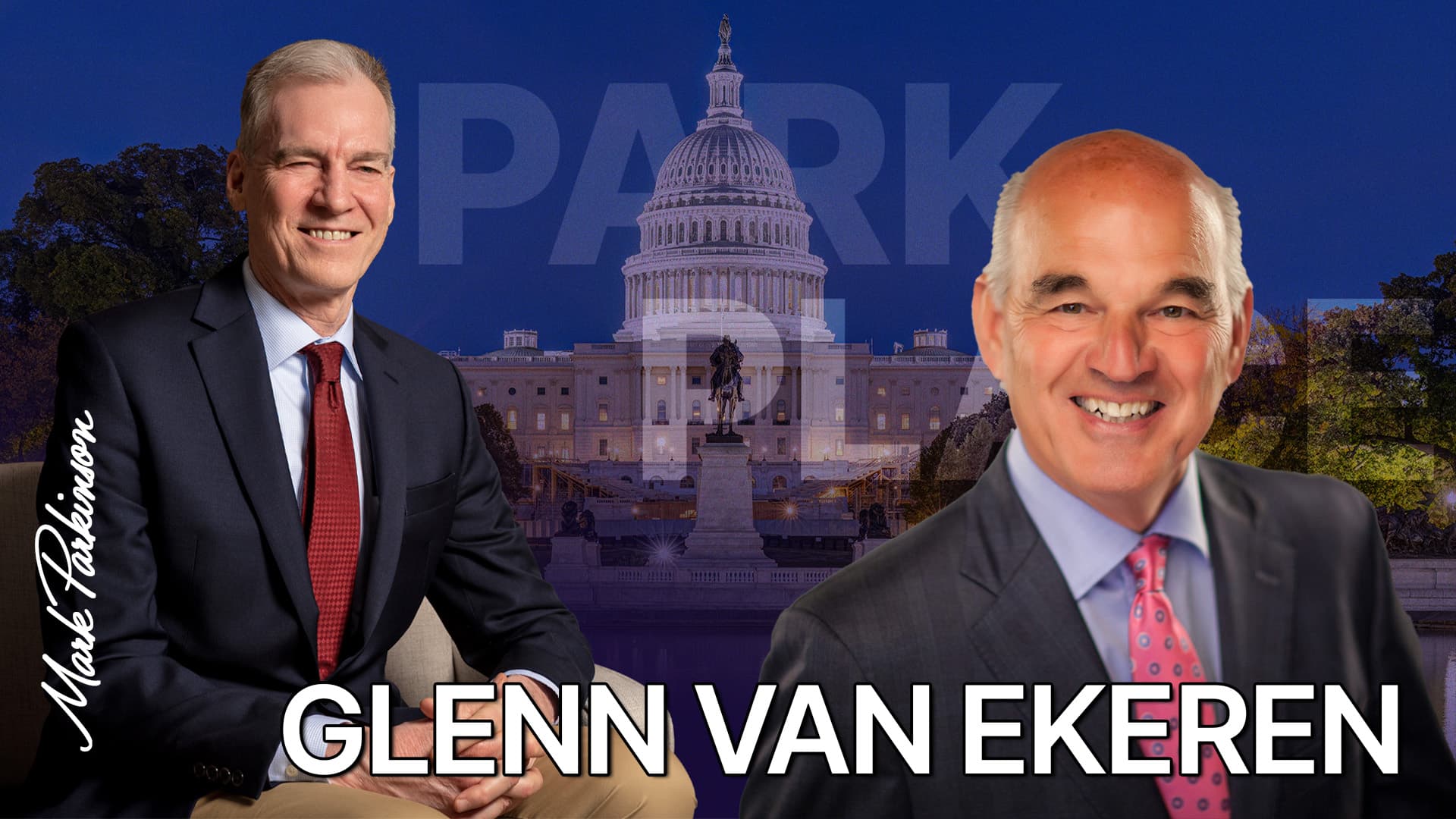
Transcript Generated by AI 00:00 Hey, 00:00 Mark Parkinson back with Park Place, 00:02 and 00:03 really excited today to have our first interview with our 00:07 new contributor, 00:07 our legal expert, 00:09 Mark Reagan. 00:10 And, 00:10 you know, 00:10 one of the unfortunate realities of long-term care is, 00:14 you gotta be involved with the legal world. 00:16 It impacts 00:18 everything, 00:18 our operation, 00:19 our business, 00:20 the laws that are passed, 00:21 the enforcements that are made against us. 00:24 Being involved in the legal world is part of it. 00:26 And we're fortunate that there are a group 00:28 of lawyers out there in the universe that have 00:31 decided to specialize in long-term care. 00:34 Some of them are really, 00:35 really good at it. 00:36 And the one that I think is the best is Mark Reagan. 00:39 And so I'm, 00:40 you know, 00:40 really pleased that Mark has agreed 00:43 to come on as our legal contributor to Park Place. 00:46 So Mark, 00:47 Mark, 00:47 welcome. 00:48 Thanks very much, 00:49 Mark. 00:49 Thanks for having me. 00:50 Appreciate it very much. 00:51 We're excited to have you and you've got like a super impressive background. 00:55 You went to Stanford, 00:57 which is, 00:57 you know, 00:58 amazing, 00:58 and Loyola 00:59 Law School, 01:00 really good schools out in California. 01:03 Were you on the volleyball team? 01:04 I saw something about that on LinkedIn. 01:07 Yeah, 01:07 I, 01:07 uh, 01:08 I was fortunate enough to 01:10 go to Stanford on a volleyball scholarship and, 01:12 uh, 01:13 was there for, 01:14 was on the team for 5 years. 01:15 I did a red shirt my freshman year and 01:18 Ended up being the captain my senior year and it 01:20 was a terrific experience to have 5 years at Stanford. 01:23 Uh, 01:24 got 01:25 2 01:26 bachelor degrees and 01:28 Uh, 01:28 really, 01:29 truly transformational for me. 01:31 That's great. 01:31 Well, 01:32 I was on the five-year plan at Wichita State and it wasn't to get multiple degrees. 01:36 It was just cause I'd screwed up and I needed, 01:38 I needed extra time. 01:40 So, 01:40 at any rate, 01:41 it's great, 01:42 it's great to have you. 01:42 You, 01:43 you obviously went to Loyola Law School, 01:44 as I said before, 01:45 and then 01:47 You got into long-term care law right out of law school, 01:50 right? 01:51 I did. 01:51 I came out of law school wanting to be a health lawyer, 01:54 uh, 01:55 and had some experience with that when I was in law school 01:59 and found 02:00 a law firm at the time, 02:02 firm by the name of Weissberg and 02:03 Aaronson that only represented healthcare providers, 02:05 much like my practice today at my current firm. 02:09 And I walked in there on May 1st of 1990, 02:12 and one of my first assignments was to 02:15 review the new regulations that were being 02:18 issued under the Nursing Home Reform Act. 02:20 And that was the beginning of my career. 02:23 I spent a lot of time as a very young lawyer. 02:26 Uh, 02:27 participating in legal actions against states 02:31 to hold states to, 02:32 uh, 02:32 a level of accountability for rate-making, 02:35 which has formed the basis of my reimbursement practice for the, 02:39 you know, 02:39 the last 3.5 decades. 02:41 Wow. 02:41 So, 02:41 I mean, 02:42 35 years, 02:43 you've, 02:43 you've seen a lot of ups and downs, 02:45 and, 02:45 you know, 02:45 there's certainly been a lot of ups and downs in the sector, 02:47 but 02:48 I think we're gonna talk a little bit about later, 02:50 that the sec sector always figures out a way to survive. 02:53 You know, 02:54 one of the things that Stacy and I learned early on was that us both being lawyers 02:58 was really helpful in 03:00 our operation, 03:02 uh, 03:02 both in the development of our buildings and 03:04 the operation of our buildings and the whole 03:07 survey process. 03:08 I mean, 03:08 the law just touches us so much. 03:11 And that's why we're, 03:13 you know, 03:13 really grateful to have 03:15 somebody of your expertise 03:17 helping guide us, 03:18 uh, 03:18 through, 03:19 you know, 03:19 what, 03:19 what will be happening in the future. 03:21 So you're now the managing partner at Hooper Lundy, 03:24 right? 03:24 That's right. 03:25 I, 03:26 uh, 03:26 I assumed that role about 5 years ago. 03:28 Uh, 03:29 the only other managing partner in the firm. 03:32 Uh, 03:32 was one of the founding partners, 03:33 Bob Lundy firm was 03:36 founded in 1987. 03:38 And, 03:39 uh, 03:40 the founders all came from the firm that I spoke 03:42 about at the outset that I joined in 1990. 03:46 It's been a really rewarding 03:49 process. 03:49 I've described this job as, 03:52 even though it's not always easy from day to day, 03:54 uh, 03:54 I describe it as a, 03:56 uh, 03:56 get to job rather than a have-to job. 03:59 Well, 03:59 that's cool. 04:00 And the fact that you're managing partners are really a big deal, 04:03 and you kind of have to be in the legal world to know that, 04:05 but congratulations. 04:05 That's, 04:06 that's, 04:06 that's real, 04:07 that's quite impressive. 04:08 On top of that, 04:09 I know that you're also outside counsel for the American Healthcare Association. 04:14 I believe for the California Association. 04:17 I think also for the Massachusetts Association. 04:19 Is that, 04:19 is that, 04:20 do I have that right? 04:21 That's, 04:22 that's all true. 04:23 Um, 04:23 I serve in the role of outside general counsel to each of those associations. 04:28 The most recent one is for the American Health Care Association. 04:32 Something that I've, 04:34 I've 04:35 wanted, 04:36 wanted to participate. 04:37 I had been involved with 04:40 the, 04:40 that association for many years, 04:42 had chaired the legal committee 04:45 for multiple years and 04:47 been on that in the reimbursement cabinet and other elements of it. 04:51 I started as general counsel for the California Association of Health Facilities, 04:55 the California affiliate, 04:56 about 25 years ago. 04:58 And then when we opened our new office in, 05:02 in Boston 05:03 just a few years ago, 05:04 I had the opportunity to 05:06 partner with the Massachusetts Senior Care Association. 05:09 Terrific. 05:10 So, 05:10 obviously you have your finger on the pulse of what's going on in the sector. 05:14 One of the things we're gonna talk about today briefly, 05:16 and I, 05:16 I know over the upcoming months and years, 05:18 you're gonna give us a lot of info on all sorts of different legal topics. 05:22 I wanna touch briefly on this reversal of the Chevron decision. 05:26 So, 05:26 I think many of the viewers have probably heard about how this case, 05:30 Chevron was overturned. 05:32 And, 05:33 you know, 05:33 I don't practice law anymore, 05:34 so I may get some of this not exactly right. 05:36 But my understanding is that 05:38 there had been, 05:39 I believe, 05:39 a Supreme Court decision 05:41 named Chevron. 05:43 That had been interpreted as giving 05:46 Agencies like CMS 05:48 very broad authority 05:51 in developing regulation. 05:53 Um, 05:53 and for a long time, 05:54 the conservative bar had wanted and the 05:56 business community had wanted to reverse Chevron, 05:59 but the right case really hadn't come along. 06:01 The composition of the court wasn't just right. 06:04 So for decades, 06:06 agencies were 06:07 going way beyond what 06:10 some of us thought their authority might be by citing the Chevron decision. 06:13 And then, 06:14 a couple of years ago, 06:15 lo and behold, 06:16 the Chevron case was overturned. 06:18 And so, 06:19 there's been a lot of discussion now of, 06:21 now that Chevron has been overturned, 06:23 does that mean that CMS 06:25 and other agencies are gonna have to back off and not issue so many regs? 06:30 Does that, 06:30 does that help the sector? 06:31 So, 06:32 let me just throw out that very broad question to you. 06:35 What, 06:35 what is the meaning of the reversal of Chevron and, 06:37 you know, 06:38 Is it a, 06:39 is it a good thing for us? 06:40 I think it's a good thing for us. 06:41 Let's start with that. 06:42 And it was a long time coming. 06:45 I think that 06:46 looking at 06:47 the history of regulation in healthcare and specifically in the sector, 06:53 is that I think over time, 06:54 we've seen 06:56 an enormous volume. 06:59 of 07:00 rulemakings that have expanded and 07:03 as well as 07:04 just a massive expansion of sub-regulatory guidance. 07:07 So, 07:07 we have this voracious bureaucracy that I think we've all seen over time. 07:13 And 07:14 really what the reversal of the Chevron doctrine was about 07:17 was it was about how courts would interpret the law. 07:21 In as much as 07:22 if you have a 07:24 regulatory agency 07:26 that is 07:28 Promulgating regulations that conflict with. 07:32 Existing statutory language passed by Congress. 07:36 Regardless of Chevron existing or not, 07:40 that's going to be unlawful. 07:41 But the more complicated situation that the reversal of Chevron. 07:47 Resolved 07:48 was that when Congress doesn't speak clearly, 07:52 if the statute's unclear, 07:53 susceptible to one or more different interpretations, 07:57 or if Congress doesn't speak at all. 08:00 What is the power of the 08:03 regulatory agency to create rules? 08:07 That 08:08 they say that they have the underlying authority to do. 08:11 And 08:12 during the years where Chevron was enforced, 08:15 as you say, 08:15 up until the last couple of years ago, 08:18 The courts were required to defer 08:21 to the administrative agency's views. 08:25 About how they were interpreting either unclear language or 08:30 no language at all. 08:32 And so we always would call this 08:35 tie goes to the government and sometimes less than a tie goes to the government. 08:41 And so when you think about 08:44 Filling in the gap, 08:45 which is what 08:46 the 08:47 Lober-Bright decision, 08:48 which was the one that reversed the Chevron doctrine essentially says, 08:52 is that it's up to courts to interpret the law 08:56 regardless 08:57 of whether or not 09:00 Congress has spoken clearly or not. 09:02 Now, 09:02 that doesn't mean 09:04 that 09:05 the courts may not, 09:06 you know, 09:07 won't side with the administrative agency's interpretation. 09:12 Courts are to 09:13 Give 09:14 them. 09:16 Do account 09:17 for their views, 09:19 but ultimately what's clear at the end of the day 09:22 is the court is to interpret the law 09:25 and not give 09:26 government 09:28 any advantage 09:29 in 09:30 exceeding its own authorization 09:33 under existing congressional statute. 09:36 Yeah, 09:36 and I mean, 09:37 I thought my reading was, 09:40 if, 09:40 if Congress says, 09:42 hey, 09:42 CMS, 09:42 you have the authority. 09:44 To do, 09:44 for example, 09:45 a staffing mandate, 09:47 then they can clearly do a staffing mandate. 09:49 But with the reversal of the Chevron decision, 09:51 if Congress doesn't speak on that topic, 09:55 um, 09:56 the CMS probably can't do that. 09:58 They, 09:58 they need some direction from Congress to do something, 10:02 as opposed to in the past, 10:03 they just, 10:03 it seems like they had a freer hand. 10:04 Is that, 10:05 is that a fair summary? 10:07 Absolutely. 10:07 You know, 10:08 so let's talk about just for a minute. 10:11 The, 10:12 the 10:13 Biden era rule involving 10:17 uh numerical minimum staffing. 10:20 In the Nursing Home Reform Act, 10:22 Congress had spoken about 10:24 what elements of numerical staffing 10:27 it wanted. 10:29 And 10:30 then there was a history of 10:33 the, 10:34 whether it was HCFA or CMS, 10:37 uh, 10:38 depending upon the time frame, 10:40 looking to try to enlarge their own authority with respect to 10:45 what it was that Congress 10:47 had spoken to 10:49 And there, 10:50 that's just a complete 10:52 conflict. 10:53 Now, 10:54 Congress can 10:56 create broad 10:57 grants of authority 10:59 to administrative agencies to act in particular ways. 11:02 So, 11:03 for example, 11:04 in the fight over 11:05 And ultimately the reversal 11:08 over the minimum staffing requirements. 11:11 Both of the courts that handled that said, 11:13 look, 11:14 Congress has spoken clearly about what will be 11:16 quantifiable and what will not be quantifiable directly. 11:20 But 11:22 CMS argued there's this broad 11:25 grant. 11:26 That gives us the ability to enact regulations to 11:30 protect the health and safety of long-term care residents. 11:34 So, 11:34 we need to 11:35 harmonize those two. 11:38 Well, 11:39 in our world, 11:41 In future fights, 11:43 CMS is going to use that same 11:45 health and safety grant from from Congress. 11:49 In the 11:50 minimum staffing context, 11:52 Congress had spoken clearly there was not ambiguity associated with 11:56 what it expected as to staffing and what it didn't. 11:59 So 12:00 in that instance, 12:01 pretty clear conflict that the courts could 12:04 resolve in a pretty straightforward way. 12:08 In future 12:10 Fights over the scope of of regulatory authority. 12:14 We'll be talking much more about 12:18 Congress didn't speak at all to a particular topic. 12:21 Uh, 12:21 and now CMS has decided to weaponize that topic or to 12:27 create new requirements around that. 12:29 What is the underlying congressional authority to do so? 12:32 How much does that grant 12:34 of issuing regulations to protect the health and safety of, 12:38 of, 12:38 of re residents give CMS 12:41 and how much does it curtail its? 12:44 Yeah. 12:44 Yeah. 12:45 So, 12:45 I think, 12:45 you know, 12:45 it's to be determined, 12:47 but obviously, 12:47 the reversal is a good thing and, 12:49 you know, 12:50 hopefully, 12:50 we'll see less regulation, 12:52 you know, 12:52 in the future. 12:53 I think it creates deterrence. 12:55 And I say that 12:57 mainly because 12:59 uh within the administration such as the current administration, 13:04 where there is 13:06 uh 13:08 Some desire to cut back on 13:11 the 13:12 growth of the regulatory state. 13:15 As well as the notion that. 13:18 That 13:20 Administrative agencies are going to have to 13:23 justify 13:25 based upon grants afforded to them by Congress. 13:29 Uh, 13:30 exactly. 13:32 Why they have the power to do what they say they do. 13:35 And so, 13:36 I think it has 13:37 two component elements to it. 13:39 One is 13:40 the prospective deterrence 13:42 that regulators need to think twice before they 13:45 go in places where they haven't been. 13:48 But also it gives lawyers that represent sectors like 13:52 ours and other heavily regulated industries, 13:56 uh, 13:56 more tools if they go there, 13:59 and we have to fight them. 14:01 Yeah. 14:02 OK. 14:02 Final, 14:03 final question, 14:03 we're gonna shift away. 14:04 Uh, 14:05 we're 14:06 bumping up against our time. 14:07 So, 14:08 just give me your view of the sector. 14:09 You know, 14:10 there's always things to be excited about, 14:11 always things to be worried about in long-term care. 14:14 Tell me, 14:14 tell me how, 14:15 how you see this playing out of it. 14:17 I think the thing that strikes me the 14:18 most about this sector is its amazing resilience. 14:23 Uh, 14:23 over 3.5 decades, 14:24 I've seen 14:26 many different administrations, 14:28 many different 14:29 Uh, 14:30 CMS administrators or 14:32 before that HICFA administrators. 14:34 And 14:35 there's always been the ability to innovate 14:38 and transform that I've always been just 14:41 remarkably impressed by. 14:42 I mean, 14:43 just to 14:44 If you look at the state of care 14:47 from 1990 when I started 14:50 to the state of care in 2025, 14:53 it's been 14:54 a remarkable transformation in terms of what it is that 14:58 operators can accomplish for people. 15:03 I, 15:03 I think that 15:04 We're gonna, 15:05 we're gonna face 15:06 challenges, 15:07 particularly around the lines of Medicaid funding and 15:11 in a lot of environments, 15:12 states are gonna have to step up a lot more and that's gonna present a real challenge. 15:17 But I always believe that, 15:18 that, 15:19 that 15:20 the people who are part of this sector, 15:22 they will find a way, 15:24 and I think that the last 3.5 decades to me 15:28 has really demonstrated to me that through good and bad, 15:31 that is the case. 15:32 Yeah. 15:32 You know, 15:33 you're right. 15:33 I mean, 15:33 Every year, 15:34 it feels like it's never been as bad 15:36 this year as it has been in the past and somehow every year we figure out a way through. 15:40 So Mark, 15:41 thanks again for 15:43 joining us on Park Place. 15:44 We're looking forward to your 15:46 thoughts as issues 15:47 emerge over the next months and years, 15:50 and we know that you'll give us uh great guidance. 15:53 And thank all of you for 15:55 watching and supporting Park Place. 15:56 We appreciate your support of this community. 16:00 Thanks, 16:00 Mark, 16:00 and I look forward to future discussions.