Creator: JJ Rabinowich
SNF Digest #189
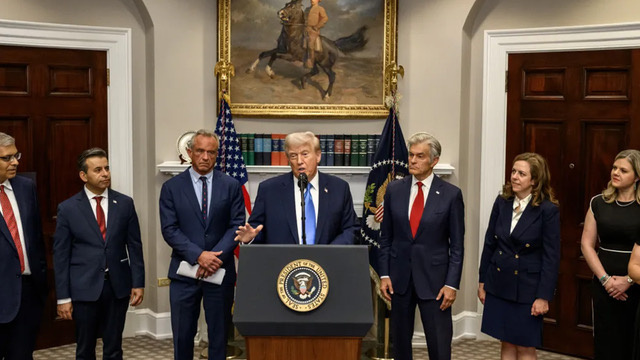
From the White House to Congress to the regulatory agencies, JJ gives you the inside word on what is what for this week.
WHITE HOUSE:
The White House focused this week on a National Security Presidential Memorandum to “reinvigorate” space transportation, new tariffs on Canada, and announcing a private $2 million donation to fund scholarships for the First Lady’s “Fostering the Future” Initiative. One item of interest:
One of the primary goals of the Administration has been to drive down drug costs. New data from the Bureau of Labor Statistics show the steepest drop in drug prices in more than 60 years. While the Medicare Drug Pricing negotiation program created by Congress during the prior Administration is also a factor, it’s a real accomplishment that will have a meaningful impact on the sector.
CONGRESS:
With Congress out on summer recess, we’re gonna go straight to the political roundup:
Another batch of primaries are in the books with mostly straightforward results.
As we get closer to the midterms, and the races become clearer, Democrats are picking up steam, even in unexpected places.
Democrats continue to explore how to use their oversight power, should they take back the House.
Meanwhile, the White House is quietly establishing back door channels to Democrats.
Politico looked at how voter anger over healthcare affordability is giving Democrats an opening in Ohio.
Speaking of Ohio, the GOP is highlighting one issue that’s causing a lot of political angst: data centers. It’s getting a lot of coverage in the Pennsylvania gubernatorial race, too.
Perhaps of interest only to those who deal in politics, but a fun read on the ‘body guys’ who help keep the Senate functioning.
AGENCIES:
The initial awards from the Rural Health Transformation Program fund are starting to roll in with CMS announcing awards for four states:
CMS announced Qualtech 2026, an event to showcase innovative technology in healthcare delivery.
HHS put out a recap of 18 months with RFK Jr. at the helm of the agency. It’s a good summary of the major policy changes that have been enacted.
HHS, via SAMHSA, announced the award of nearly $97 million to strengthen behavioral health services throughout the country.
HHS, via the Administration for Children and Families (ACF), added peer support programs to Title IV Prevention services, thereby making them eligible for federal reimbursement. The announcement was made in Iowa, which became the first state to adopt the program.
Not directly relevant to SNFs, but whenever the government starts thinking about data, it’s worth keeping an eye on. The FTC is seeking comment on the usage of data in the practice of “surveillance pricing,” i.e., creating personal pricing for each customer. The full enforcement policy under discussion can be found here (PDF).
FROM THE NOTEBOOK:
Congratulations Indiana! CMS finally approved the state’s preprint, hopefully setting the stage for the UPL payments to begin. The formal notice from Meyers & Stauffer is here (PDF).
CMS finally approved Utah’s State Plan Amendment related to their UPL program. The SPA can be found here (PDF).
The Kaiser Family Foundation released their updated 2026 look at provider taxes and Medicaid.
JAMA released a new study that found MA disenrollment increased with the development of new complex conditions.
A new investor lawsuit alleges that UnitedHealth defrauded Medicare and opened itself up to cybersecurity gaps.
Modern Healthcare reported that Centene is exiting three states as they shrink their MA plans.
You know who is getting into the MA market? Costco.
Despite the federal government offering to help cover the cost, most states are choosing not to participate in providing Medicaid access to weight loss drugs.
Epic announced a new tool that will allow clinicians to instantly verify if a prior authorization is required. At launch four health systems will be participating.
Pitchbook released their Q2 report on healthcare PE activity, finding a significant decline in year over year transactions. The report suggests that state oversight of healthcare transactions is part of the reason for the decline in activity.
A New York Times investigation explored how Wall Street is benefiting from PI lawsuits.