Creator: JJ Rabinowich
SNF Digest #190
From the White House to Congress to the regulatory agencies, JJ gives you the inside word on what is what for this week.
WHITE HOUSE:
Over the last week, the White House issued a new Executive Order to protect the country’s power system, creating a new Commission to establish the United States Space Academy to prepare and celebrating the beginning of the new school year. One item of interest:
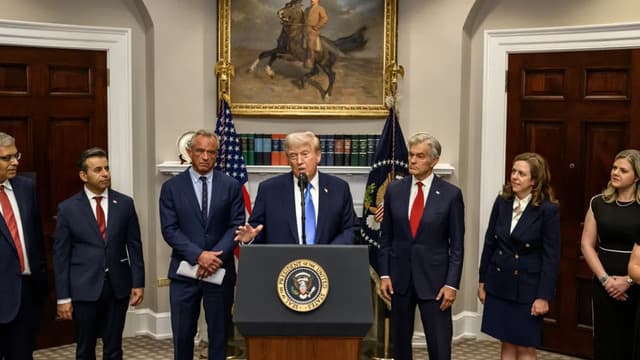
In an effort to bring down the high costs of beef, the President temporarily is removing tariffs for imported beef. The move has drawn significant backlash from elected officials and American farmers, but the hope is that it will lower food prices over the next 90 days.
CONGRESS:
With Congress out on summer recess, we’re gonna go straight to the political roundup:
While the Senate is out until September 14th, the House returns this week for an abbreviated session. At the top of the agenda? Passing the stopgap funding bill.
After several iffy weeks, the President’s endorsements got back in the win column as two of his preferred candidates picked up primary wins in South Carolina and Oklahoma.
It’s not the endorsement alone that matters; it looks like it’s the mobilization of the Presidential support and allies that makes the difference. To date, that support hasn’t materialized in the Texas Senate race.
A fun read on the ex-Republicans running as Democrats…
Politically wonky, but a potentially impactful court decision that limits what campaigns can spend on political ad spending.
Speaking of political spending, the big ticket item on the agenda this year? Data centers.
Another perspective on just how old Congress is getting.
One relevant CRS report from the week: an updated guide for Congressional offices on the taxation of social security benefits.
AGENCIES:
Another week, another batch of awards announced by CMS for the Rural Health Transformation Fund:
CMS continued its efforts to keep dollars from flowing out the door as they announced that they prevented more than $1.6 billion in payments to lab providers.
The GAO announced new guidance to help federal agencies upgrade their cybersecurity defenses against quantum technology. The Treasury also announced their own quantum security task force. The announcement comes the same week that many of the leading AI companies warned of the need to strengthen cyber defenses against AI-enabled cyberattacks.
Unrelated to SNFs, but always interesting to see efforts across the federal government to modernize the way they use data. The Army announced the launch of a new dashboard, called Fiscal Frontline, to give military leaders real time insight into the fiscal stability of the service’s financial health.
There was a lot of noise last year about DOGE’s efforts to reduce federal manpower across the government. Well, it turns out that most of the vacated positions have since been filled by new hires.
Yet another loss for PhRMA in their lawsuits against CMS’ Medicare Drug Pricing Negotiation program.
FROM THE NOTEBOOK:
California’s Office of Health Care Affordability voted to establish new penalties on healthcare providers, such as hospitals, insurers, and others, which exceed the state’s annual growth targets. Health Affairs has a deep, if wonky, look at the concept.
In a sign that states are starting to take a stand, Maryland filed a lawsuit against United Healthcare and Optum for “allegedly providing a defective computer system” to the state that crashed on its first day and led to millions of dollars in taxpayer losses.
Along the same lines, Florida filed a lawsuit against two of the largest PBMs alleging they conspired to fix costs.
Connecticut is creating a new housing development for healthcare workers.
The Washington Post Editorial Board has a plan to stave off insolvency for Medicare and Social Security.
Another hospital system, this time in Florida, said sayonara to UnitedHealth.
Emory’s School of Nursing is starting a comprehensive study on the usage of agency staff in SNFs.
Stat News has a new series on how hospitals are navigating the looming budget cuts from the One Big Beautiful Bill.
KFF gave a quick overview of the impact of the newly proposed $103,000 H-1B fee and which states would be hardest hit.
In the past, we’ve highlighted the ‘voluntary pledges’ that the current Administration has been securing from private companies to comply with different healthcare goals. Well, Kaiser Health News looked at the follow through to the pledges…