Creator: Patrick Connole
Setting the Table for Congress, LTC Eyes AI Scams, MA Bills
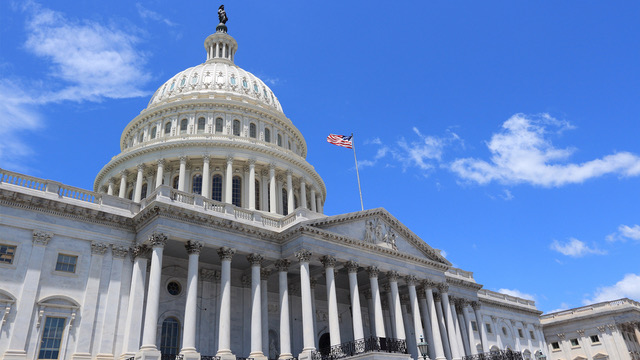
The two leading trade associations for the LTC sector are weighing in on their legislative priorities, including action on MA and AI scams against older Americans.
The American Health Care Association/National Center for Assisted Living (AHCA/NCAL) and LeadingAge are active on Capitol Hill with each issuing blog updates on their most recent agenda items.
First, AHCA/NCAL said in its update that legislation tied to Medicare Advantage (MA) is at the center of its advocacy efforts, notably the “Medicare Advantage Improvement Act” (S. 4384/H.R. 8375), which would strengthen beneficiary protections while also addressing concerns with prior authorization and payment practices.
The “Improving Seniors’ Timely Access to Care Act” (S.1816/H.R. 3514), has seen positive legislative movement recently as it passed out of the markup phase in the House Ways and Means and Energy and Commerce committees, AHCA/NCAL said. “The versions of the bill passed were slightly different, so we will be watching further actions very closely,” the post said.
Other MA-related bills AHCA/NCAL has endorsed include:
• H.R.4559 – “Medicare Advantage Prompt and Fair Pay Act.”
• S.2879/H.R.5454 – “Medicare Advantage Prompt Pay Act.”
Quality Rises, Too
The advocates said quality care and workforce also remain top priorities. The “Ensuring Seniors’ Access to Quality Care Act” (S. 4467/H.R. 7096), otherwise known as the CNA Lockout Bill, seeks to improve the ability of SNFs to resume and improve in-house CNA programs that have been halted due to CMPs unrelated to quality of care.
AHCA/NCAL said they are also monitoring the “Improving Access to Medicare Coverage Act” (S. 4641/H.R.3954), also known as the Observation Stay Bill, which seeks to protect beneficiary access to covered post-acute care by including hospital observation days in Medicare’s three-day qualifying stay.
AI Scams
In sight for LeadingAge of late has been the use of AI to perpetuate fraud against older adults. In that vein, the group in its blog post said members of the Senate Special Committee on Aging are seeking solutions to these emerging threats.
Senate Committee on Aging Chairman Rick Scott (R-Fla.) and Ranking Member Kirsten Gillibrand (D-N.Y.) led the July 29 hearing, “The AI Deception Machine: Deepfakes, Chatbots, and the New Frontier of Senior Fraud,” featuring testimony and recommendations from fraud victims and experts.
LeadingAge said Scott and Gillibrand’s report, Artificial Intelligence & Older Americans: Confronting New Threats, Unlocking New Opportunities, released the same day as the hearing, notes that as AI comes to the forefront, Congress must ensure AI brings benefits to at-risk populations like older adults and safeguards against fraud.
Committee Hearing
Three expert witnesses testified at the Aging panel’s hearing, sharing perspectives from banking, consumer protection, and privacy and cybersecurity. In addition, two victims of AI-generated fraud spoke.
Committee members and witnesses recommended potential solutions to consider, including the following:
• Prioritize Education and Awareness. Empower older adults to identify deepfake dupes and deliver education through trusted community channels. Coordinate agencies around education, as awareness efforts are currently fragmented. Offer courses for older adults that include information about how they can protect themselves from AI, not just how to use it.
• Improve Coordination and Enforcement. Develop a national strategy that directs agency coordination with an all-of-government response, as well as assigns accountability and aligns incentives to address fraud. Promote greater coordination across federal and state agencies and industry, plus knowledge sharing among policymakers, law enforcement, and industry. Coordinate enforcement, bringing consequences to platforms that support fraud. As these frauds often stem from international conspiracies, establish international cooperation and facilitate connections to local law enforcement. Address cuts to federal agencies that handle enforcement and victim assistance.
• Restore Trust in Social Media and Telecommunications. Prevent social media platforms from posting deepfakes and assist Americans in knowing which faces and pieces of information are real versus AI generated. Require phone companies to disclose where a call is coming from to help consumers identify AI voice clones. Require companies to be transparent about when consumers are interacting with AI and when they are conversing with a human.
• Use AI to Prevent Fraud. Invest in AI technology to identify and stop deepfakes before they reach consumers, just as spam filters currently work in the background to protect email inboxes.
• Interrupt Fraud in Action. Consider processes that implement interventions at banks as people withdraw or transfer large amounts. Establish a faster way to take down fraudulent ads.
• Centralize Reporting. Develop a centralized reporting portal that might facilitate people coming forward; currently there are multiple places to report scams and there is no coordination among them.
Comments or questions? Contact Patrick Connole at pconnole@parkplacelive.com.